 Cloture
Every Property Line
Deserves a Straight Line
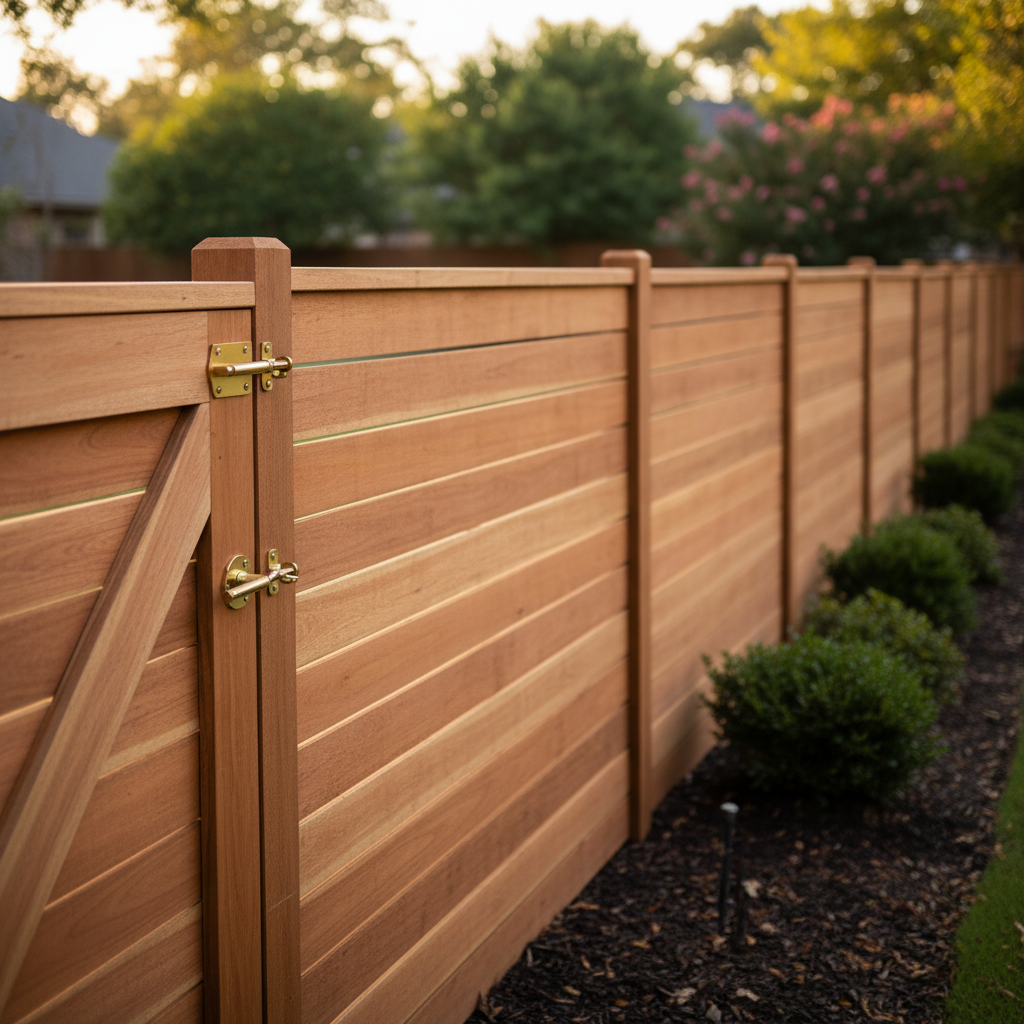
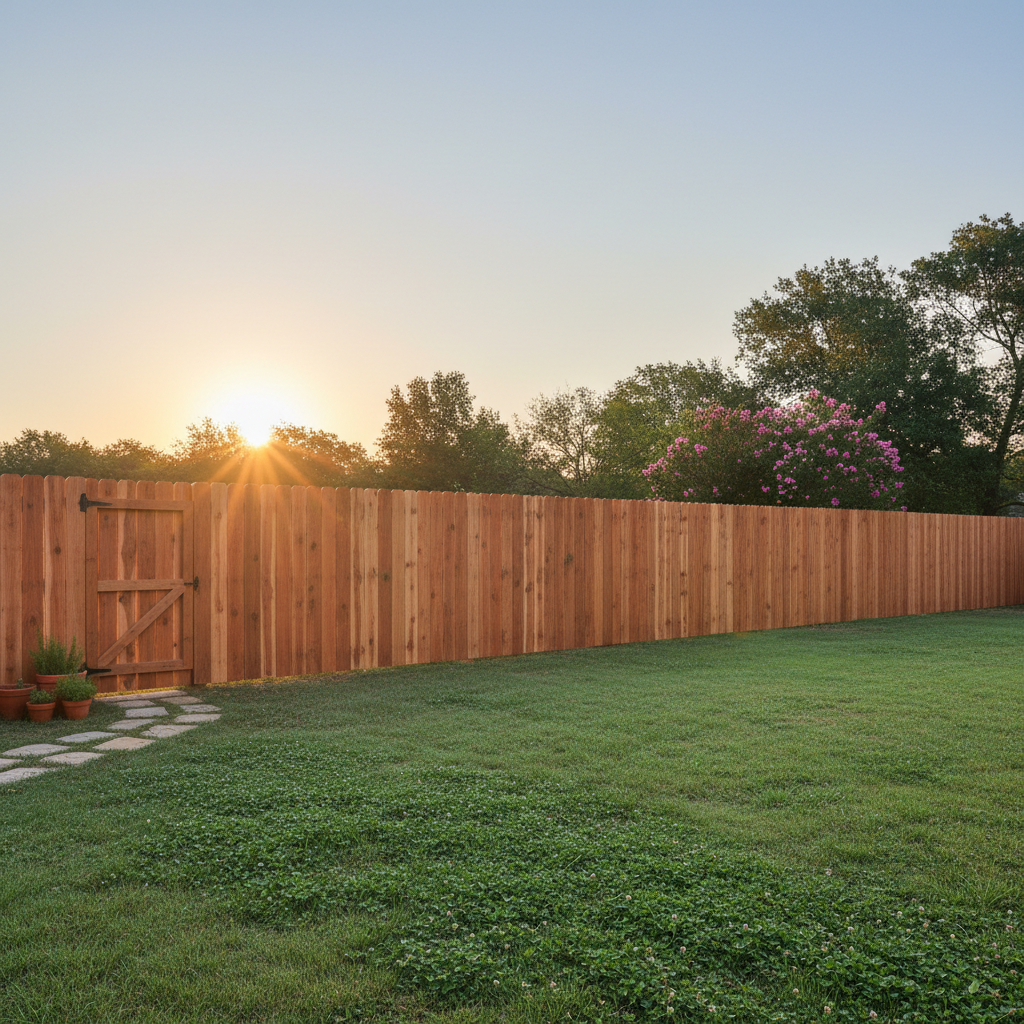
We sink posts and stretch wire across the flat black-soil parishes of Northeast Texas — from six-board horse fence along FM 286 to eight-foot cedar privacy walls behind new builds off Lamar Avenue.
How deep do posts need to go in Red River clay?
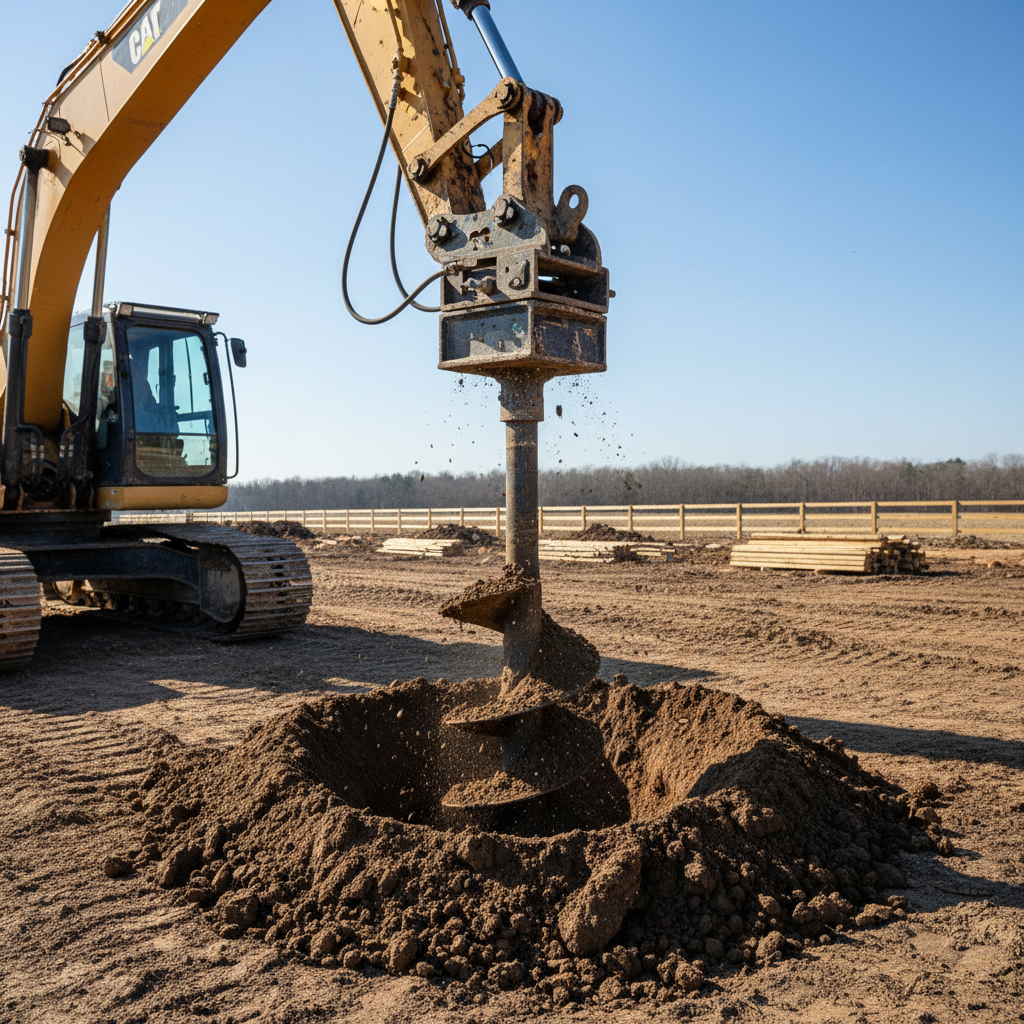
Red River clay is some of the most demanding soil in Texas. It swells when wet and shrinks when dry — a cycle that can heave a shallow post right out of the ground within two calving seasons. Our standard in Lamar County: 36 inches minimum for privacy and ranch posts, 42 inches for corner and gate posts that take lateral load.
We dig with a hydraulic auger and set posts in 80-lb bags of fast-setting concrete, crowned above grade so water sheds away from the wood. Cedar and pressure-treated pine both get this treatment — the soil doesn't care which species you chose.
For sandy creek-bottom lots east of town, we go to 48 inches and add a gravel drainage layer at the bottom of the hole. Ask us about your specific parcel; we've been in the ground here since 2006 and know which neighborhoods have which soil profiles.
Do I need a permit to build a fence in Lamar County?
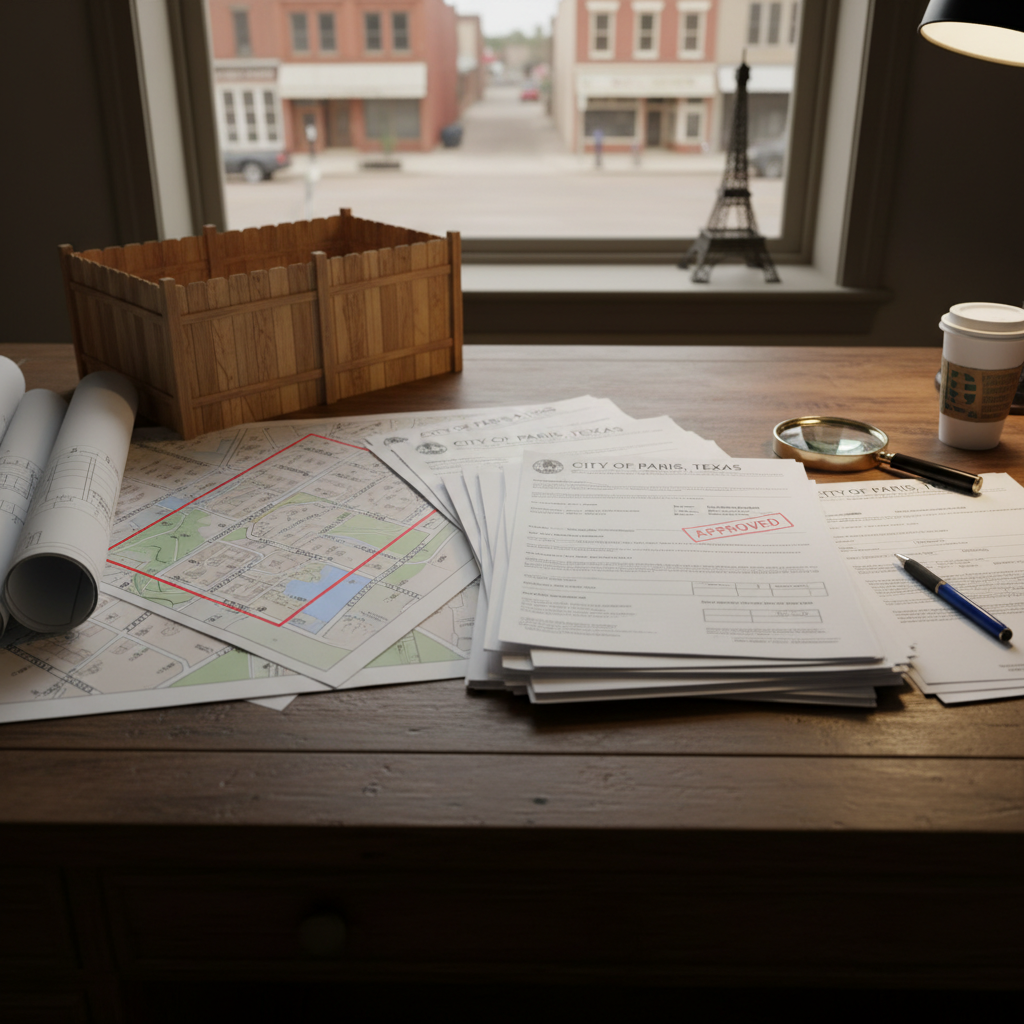
It depends on where your property sits. Inside the Paris city limits, any fence over six feet requires a building permit — and the city counts from finished grade, not from where the post ends. We pull permits on your behalf as part of the job.
Out in the county, agricultural fencing doesn't need a county permit. But watch your deed restrictions: subdivisions platted since 2010 often have HOA covenants that limit height, material, and even color on street-facing elevations.
Flood-zone lots along the Bois d'Arc Creek drainage are a special case. We've done enough of these to know the floodplain administrator's requirements by heart — solid fence panels below base flood elevation need to be breakaway-designed or have flood vents.
What's the difference between dog-ear and flat-top cedar boards?
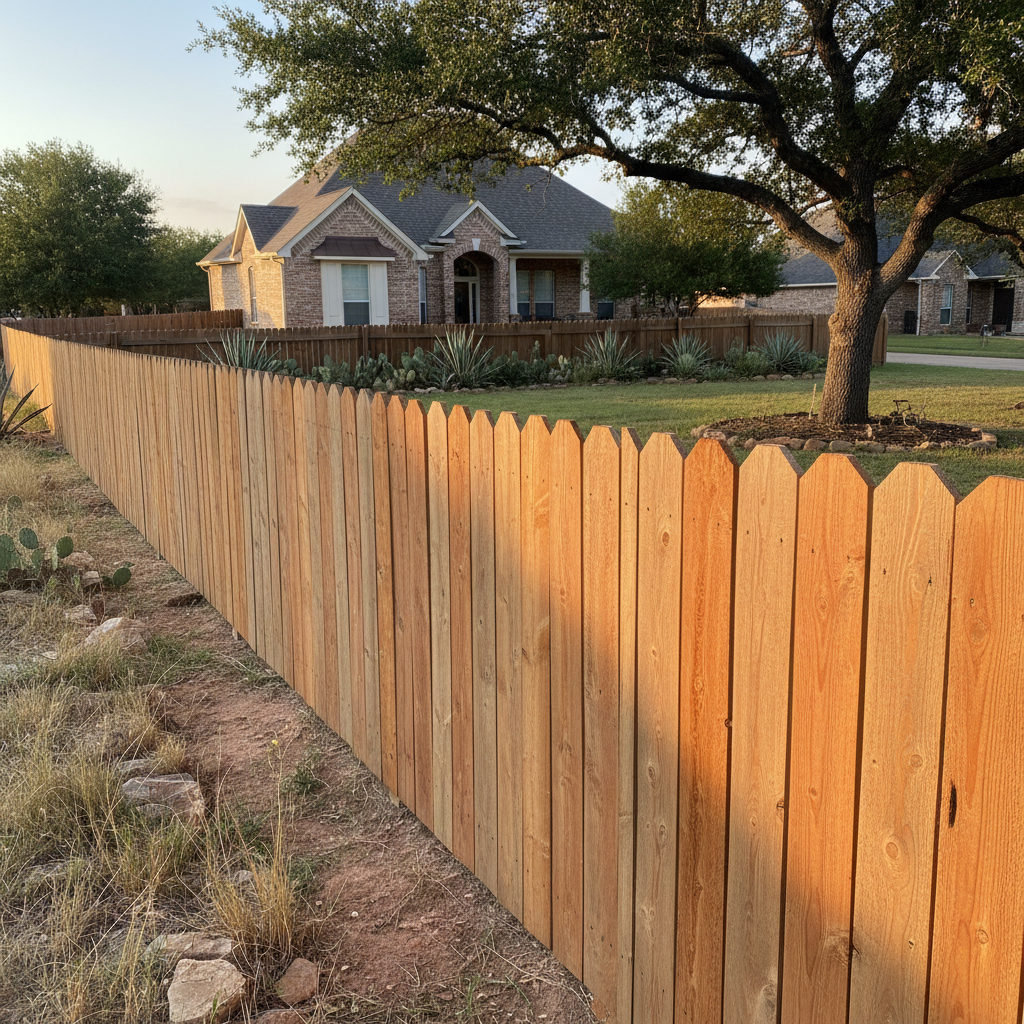
Corners cut at 45°. The classic Texas backyard look. Sheds water from the top cut, slightly less formal.
The cut at the top of the board is the only difference, but it changes the whole character of the fence. Dog-ear boards have both top corners clipped at 45 degrees — it's the look most people picture when they say "cedar privacy fence." It's been the standard in Paris neighborhoods since the 1970s.
Flat-top boards are cut straight across, giving the fence a clean horizontal sightline. It reads as more contemporary and pairs well with board-on-board patterns where boards overlap slightly for a shadowline effect.
Functionally, both perform identically. The flat-top sheds a hair less water from the end grain, but if you're applying a quality penetrating oil stain — which we recommend every 3 to 4 years in Texas sun — it won't matter.
When should I replace corner posts before calving season?
The short answer: before the ground freezes in January, which in Lamar County means October through early December. Corner and gate posts take the full tension load of every wire run — when one rots at grade, the whole fence section loses tension and livestock find the gap before you do.
Signs it's time: you can rock the post by hand, there's a rust ring at grade from the wire staples, or the post sounds hollow when you tap it with a hammer. In Red River clay, we see most failures at the 8-to-12-inch depth where the soil alternates wet and dry most aggressively.
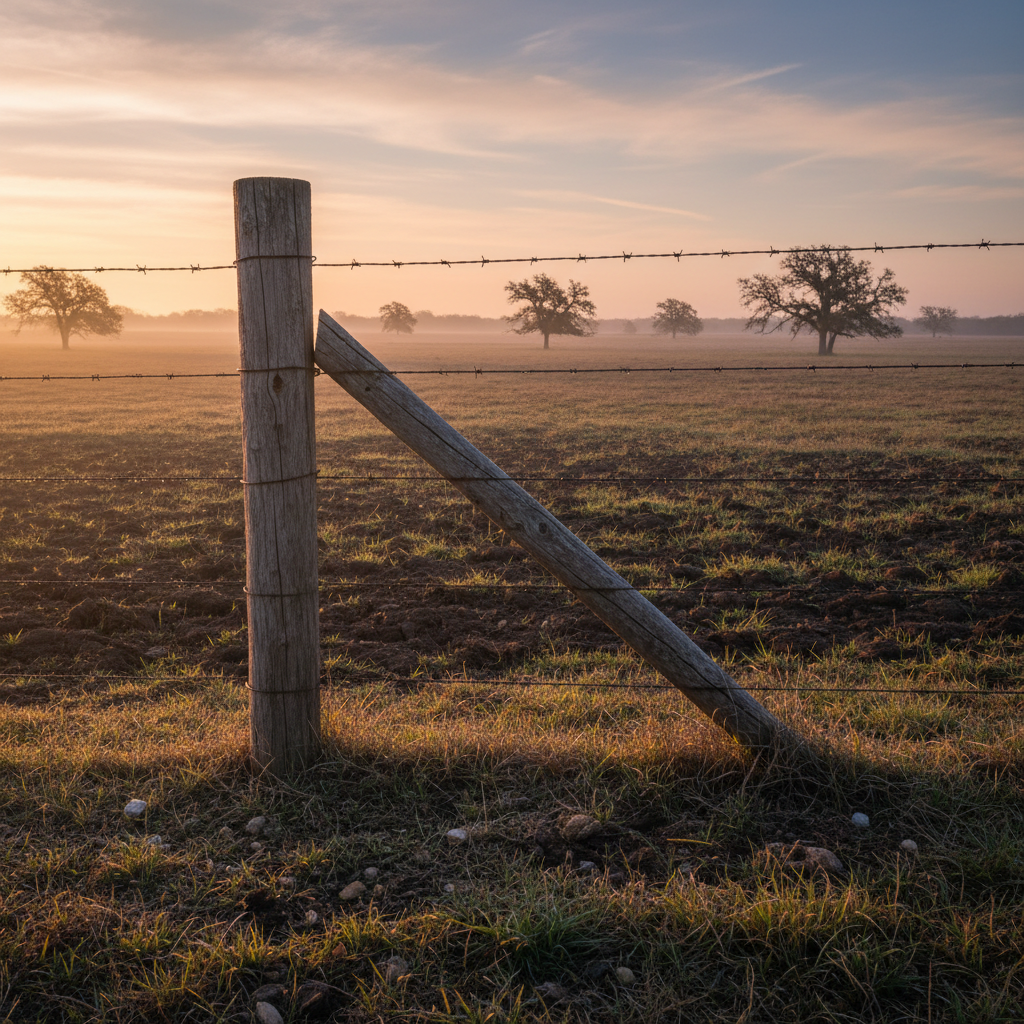
We replace corner posts with 6×6 pressure-treated yellow pine set 48 inches deep, deadman-braced with a diagonal brace post and a horizontal rail. That brace assembly is what actually holds wire tension — the corner post alone won't do it.
"They showed up on time, dug to the right depth for our clay soil, and left the yard cleaner than they found it. The cedar looks incredible two years later."
"I called three companies. Cloture was the only one who mentioned the permit requirement upfront and handled it themselves. That told me everything."
"We needed chain-link with two drive gates on a commercial lot off Loop 286. They had posts in the ground the next morning."